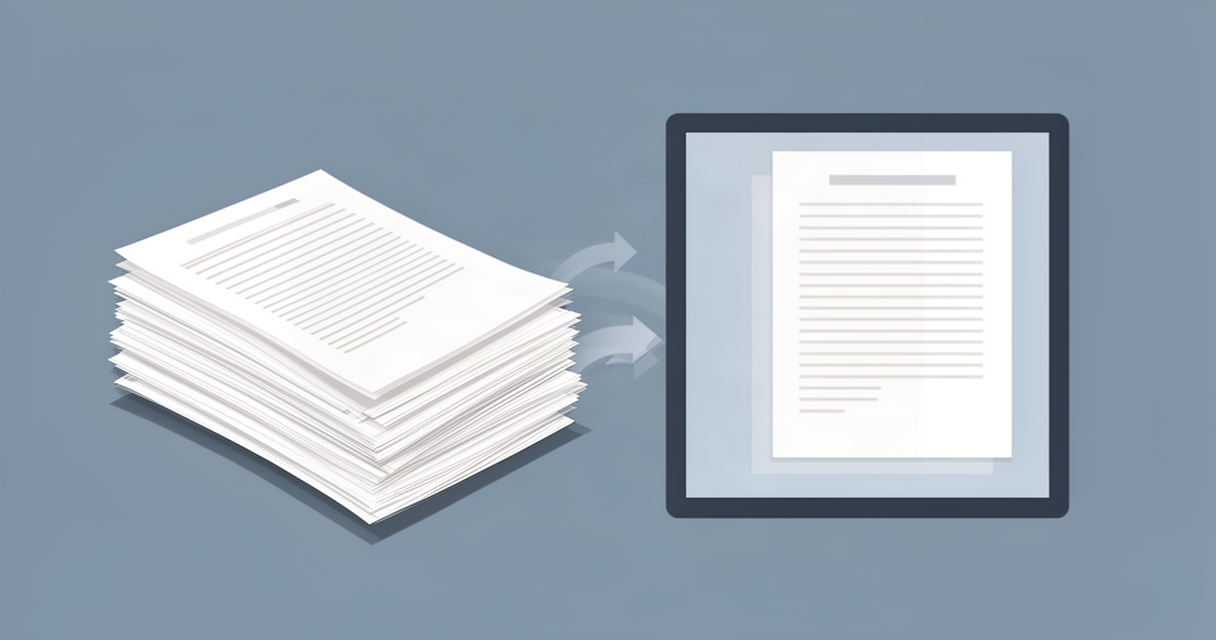
An employee handbook used to mean one of two paths: pay an employment attorney a few thousand dollars to draft one from scratch, or copy a template off the internet and hope nothing important got left out. AI handbook generators — Waybook, Trupeer, FirstHR, SixFifty, and general-purpose tools like ClickUp, Taskade, or a well-prompted ChatGPT session — now offer a third path. Answer a handful of questions about the company and get a full draft handbook in minutes.
The stakes are real. A handbook is not a nice-to-have onboarding document — it’s a compliance-critical piece of paper that can be pulled into a wrongful-termination claim, an EEOC complaint, or a wage dispute. Getting it wrong doesn’t just look sloppy. It creates liability.
The quick answer: an AI-generated handbook is genuinely worth it as a first draft — it saves real money and real time compared to starting from a blank page or paying an attorney to draft from zero. It is not worth it as a final document, especially for any business with employees in more than one state. The gap between those two uses is where this decision actually lives.
This is not legal advice. It’s a framework for deciding how much human legal review a specific business needs before that draft goes out to employees — consult an employment attorney for guidance specific to any individual situation.
What AI Handbook Generators Actually Do
The category splits into two tiers, and the difference matters more than any feature-list comparison.
Purpose-built AI handbook tools — Waybook, Trupeer, FirstHR — are trained or configured specifically to output HR policy documents. A business answers a short intake questionnaire (state, headcount, industry, whether it offers benefits, PTO structure) and the tool assembles a document: at-will employment language, code of conduct, anti-harassment policy, PTO and leave sections, safety and technology-use policies, sometimes an acknowledgment page for signature.
General-purpose AI tools — ChatGPT, or handbook templates inside project-management platforms like ClickUp or Taskade — do the same job less precisely. A prompt asking for a “small business employee handbook for [state], [industry]” produces something structurally similar to the purpose-built tools, but without any built-in compliance database checking the output against actual state requirements. It’s drafting help, not a compliance product.
Compliance-backed generators — SixFifty is the clearest example — sit in between. These tools are built on an actual legal database maintained by employment lawyers, not just a language model guessing at plausible-sounding policy language. The output is templated but the templates are attorney-authored and state-specific, which is a materially different product from a raw AI draft.
All three categories are faster and cheaper than starting with an attorney. Employment attorneys typically quote roughly $3,000 to $5,000 for a custom-drafted handbook, more for multi-state businesses — a cost that puts a compliant handbook out of reach for a lot of five-person companies in their first year. An AI draft compresses that timeline from weeks to an afternoon and the cost from thousands of dollars to, in most cases, a single software subscription.
What AI Generators Get Wrong
The failure mode is not that AI handbook tools produce bad prose. It’s that they produce confident, professional-looking prose that can be legally incomplete or legally wrong, and nothing in the interface signals which sections fall into that category.
Forbes reported in 2024 that AI-generated employee handbooks were creating problems for the small businesses that shipped them without review. The failure modes described in that coverage line up with what employment attorneys have been warning about generally: a business in a state with legally required overtime or meal-break policies can get a handbook that simply omits them, because the AI tool wasn’t built with that state’s specific mandates in its training or template database. A business can also end up missing a required anti-harassment policy that only becomes a problem when a claim is actually filed — at which point the missing policy is evidence, not a hypothetical.
Two distinct risks sit underneath these reported cases:
- Missed state-mandated policies. Every state has its own list of required or strongly recommended handbook policies — paid sick leave rules, pregnancy accommodation language, final-paycheck timing, and more vary by state and sometimes by city. A generic AI draft trained on aggregate patterns can easily produce a handbook that reads as complete while missing the two or three policies that particular state actually requires.
- Hallucinated law. Large language models are pattern generators, not legal databases. Asked to describe a state’s overtime exemption threshold or leave-of-absence requirement, an AI tool can produce a plausible-sounding number that is simply wrong. A handbook that states incorrect legal thresholds is arguably worse than one that omits the topic — it actively misinforms both the employer and the employee.
Neither failure mode is a knock against the concept of AI drafting. It’s a reason the draft needs a human compliance check before distribution, every time.
Is an AI-Generated Handbook Legally Valid Without a Lawyer?
Nothing about a handbook requires an attorney’s signature to be legally operative — an employer can distribute an AI-drafted handbook and it functions as company policy the moment employees acknowledge it. Legal validity isn’t the issue. Legal completeness and accuracy are.
The risk isn’t that a court would throw out an AI-drafted handbook for lacking a law degree behind it. The risk is that the handbook is missing a policy the state legally requires, or misstates one, and that gap surfaces during a claim rather than during a calm review. A handbook only proves useful in a dispute if it’s actually correct.
The Decision Framework: How Much Review Does This Business Actually Need
The right amount of human review scales with two variables: how many states the business operates in, and how much risk a mistake actually carries. Company size matters less than those two factors.
Single-state, very small, low complexity — a handful of employees, one state, no union, no heavily regulated industry (healthcare, finance, transportation). An AI draft, followed by a careful owner or HR lead review against that specific state’s Department of Labor requirements, is a reasonable starting handbook. A one-time paid review from an employment attorney is still worth the budget if available, but it’s not the blocking requirement it is for a larger or more complex employer.
Multi-state, growing, or any added complexity — operations in California, New York, or other states with dense employment-law requirements; 20 or more employees; a union presence; a regulated industry. This profile should never ship an AI draft as the final document. The right use of AI here is to generate the first draft fast and hand it to an employment attorney for review rather than a from-scratch build — that still saves the attorney’s drafting hours and cuts the total cost, without skipping the compliance check. Multi-state is exactly where generic AI tools miss the most, because each state layers on different required policies and the tool has to get all of them right simultaneously.
The middle option — compliance-backed services like SixFifty, or the handbook/policy modules bundled into a full HRIS platform such as Rippling, BambooHR, or Gusto, sit between a raw AI draft and a full custom attorney build. These tools template state-specific policies with actual legal backing rather than a language model’s best guess, which makes them a reasonable middle ground for a growing business that isn’t ready to pay for full custom drafting but needs more than a generic AI output.
Where AI Genuinely Earns Its Keep — and Where It Doesn’t
The position on AI in hiring generally is that it belongs in grunt work and drafting, not in final compliance or decision-making — and a handbook is a clean test case for that line.
Drafting a handbook from a blank page is grunt work: assembling boilerplate at-will language, formatting a PTO accrual table, writing a first pass at a code-of-conduct section. AI tools do this well, and doing it well saves an owner or a solo HR hire real hours they’d otherwise spend hunting for template language online.
Deciding whether the anti-harassment policy meets a specific state’s requirements, or whether the leave policy correctly reflects a jurisdiction’s paid-sick-leave law, is a compliance decision — not a drafting task. That’s the part AI tools are structurally bad at, because getting it right requires knowing the current state of the law in a specific jurisdiction, not producing plausible-sounding text. Treating an AI draft as done the moment it’s generated is the mistake; treating it as a fast first draft that still needs a compliance pass is the correct use of the tool.
Where the Handbook Fits Once It’s Built
A handbook is not useful sitting in a folder. It gets distributed during onboarding, acknowledged by signature, and referenced later if a dispute arises — which means the handbook decision doesn’t stand alone. It connects to two other pieces of the small-business HR stack.
The delivery mechanism matters as much as the content: a handbook that never gets a documented acknowledgment from every employee is legally weaker than one that does, regardless of how well it was drafted. Tools like Enboarder exist specifically to make that acknowledgment step automatic and trackable rather than a PDF that quietly sits unread in an inbox.
The handbook also sits next to other compliance paperwork a small employer has to get right — I-9 verification being the most audited example. A business investing in AI to speed up handbook drafting should apply the same “draft fast, verify with a human or a compliance-backed tool” logic to I-9 compliance software, where the penalty for an error is direct and immediate rather than contingent on a future dispute.
Cost and Speed at a Glance
| Path | Typical Cost | Turnaround | Legal Review Included | Multi-State Handling |
|---|---|---|---|---|
| Employment attorney, custom drafted | Roughly $3,000-$5,000, often more for multi-state | Weeks | Yes, by definition | Strong, if the attorney is licensed in the relevant states |
| Compliance-backed generator (e.g., SixFifty, HRIS handbook module) | Software subscription, meaningfully cheaper than custom attorney drafting | Hours to a few days | Templates are attorney-built; ongoing changes still benefit from periodic review | Better than raw AI — built on a legal database, not just language patterns |
| Pure AI generator or general LLM (Waybook, Trupeer, FirstHR, ChatGPT) | Cheapest tier, often a modest monthly fee | Minutes to hours | No — draft only | Weakest — most likely to miss state-specific requirements |
Frequently Asked Questions
Is an AI-generated employee handbook legally valid without a lawyer?
Yes, in the sense that nothing requires attorney sign-off for a handbook to function as company policy once employees acknowledge it. The real risk isn’t validity — it’s completeness and accuracy. An AI draft can be missing a state-required policy or contain an incorrect legal claim, and that gap only becomes visible during an actual dispute.
What do AI handbook generators get wrong most often?
Two things: missing state-specific required policies, since generic tools aren’t built against every state’s individual requirements, and hallucinating legal specifics like leave thresholds or overtime rules that sound plausible but are inaccurate. Forbes reported cases along these lines in 2024, and both failure modes are structural to how these tools work, not one-off bugs.
How much cheaper is AI than hiring an employment attorney?
An attorney-drafted handbook typically runs roughly $3,000 to $5,000, more for multi-state employers. AI generators cut that to a software subscription in most cases — a substantial saving on the initial draft, though the saving shrinks for any business that still needs a paid attorney review pass afterward, which is the case for most multi-state or regulated employers.
Which tools actually handle multi-state compliance versus just templating a document?
Compliance-backed services like SixFifty are built on an underlying legal database maintained by employment lawyers and are meaningfully stronger on multi-state accuracy than a general AI generator or a raw ChatGPT draft. Purpose-built AI tools like Waybook, Trupeer, and FirstHR speed up drafting but do not carry the same built-in legal-database backing — treat their multi-state output as a draft that still needs review, not a finished compliance document.
What’s the real risk of skipping legal review on an AI-drafted handbook?
The risk is a policy gap or inaccuracy sitting undetected until it matters — a missing anti-harassment policy surfacing during a claim, or a leave-policy error surfacing during an audit or a terminated employee’s complaint. The cost of a review pass upfront is small relative to the cost of defending a handbook gap after the fact.
The Verdict
AI handbook generators earn their place in the small-business HR stack as a drafting tool, not as a compliance department substitute. A single-state business with a handful of employees can reasonably lean on an AI draft plus a careful self-review against that state’s requirements, with a one-time attorney review as a strong optional add if budget allows. A multi-state, growing, or regulated employer should use AI to generate the first draft and cut the attorney’s drafting hours — then treat attorney or compliance-service review as mandatory, not optional.
The tool writes the draft. A human — ideally one with employment-law training — still has to own whether that draft is actually compliant before it reaches an employee’s inbox.